Palace at Versailles – Part Three

architecture, Photography, Portraits, Travel

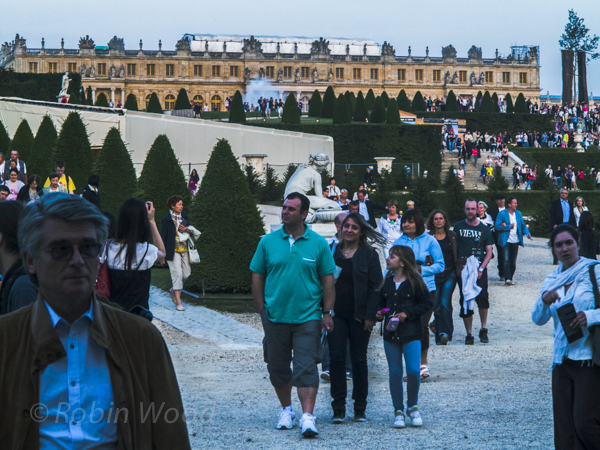
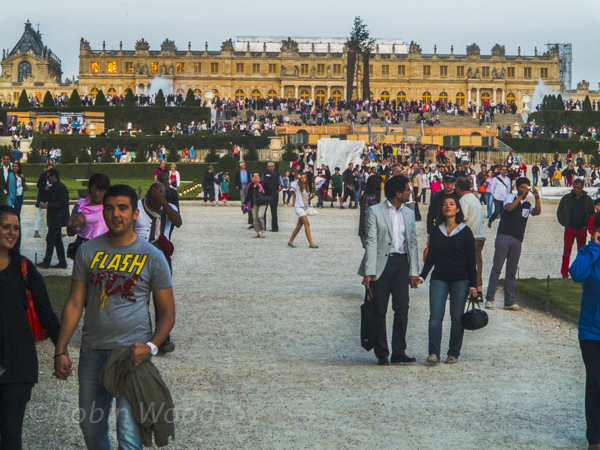
Above: The grand Château de Versailles as seen from the gardens, July 12, 2013.

It’s time for more images from the extravagant Château de Versailles. If you missed either Part One or my Hall of Mirrors post check them out for more history and a more complete tour. This post fits in particularly well with the Weekly Photo Challenge – Grand. 

Palace at Versailles: Hall of Mirrors

architecture, Black & White, Photography, Portraits, Travel

Above: Le château de Versailles as seen from the gardens. 

In continuation with Palace at Versailles Part One, it’s time for part two.

There’s more Palace de Versailles then a person could fathom to tour and document in one day. Between hordes of people and long walks with minimal refreshments or restrooms the end of the tour was welcome.

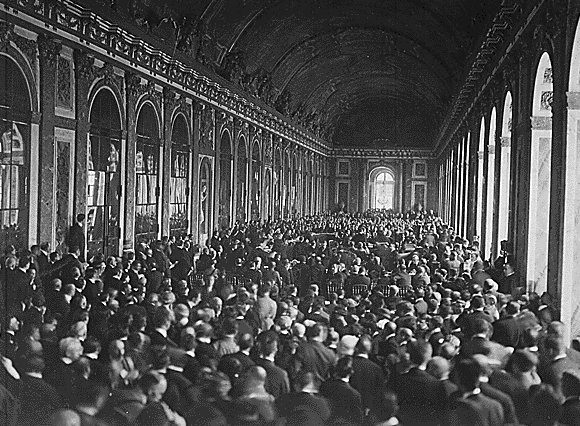
One of the highlights was the hall of mirrors, also known as la grande galerie. The hall of mirrors was the utmost symbol of power and vanity from a time when mirrors were were only for the wealthy. Perhaps the most well-known story involving the hall of mirrors – if not the entire Palace – is the Treaty of Versailles. The armistice that ended WWI on June 28, 1919, also often credited the leading cause for WWII, was signed in this hall. WordPress.com has a detailed and succinct post about the treaty. 

Historyplace.com has a photo credited to U.S. National Archives of the absolutely packed hall during the signing.

treatyofversailles

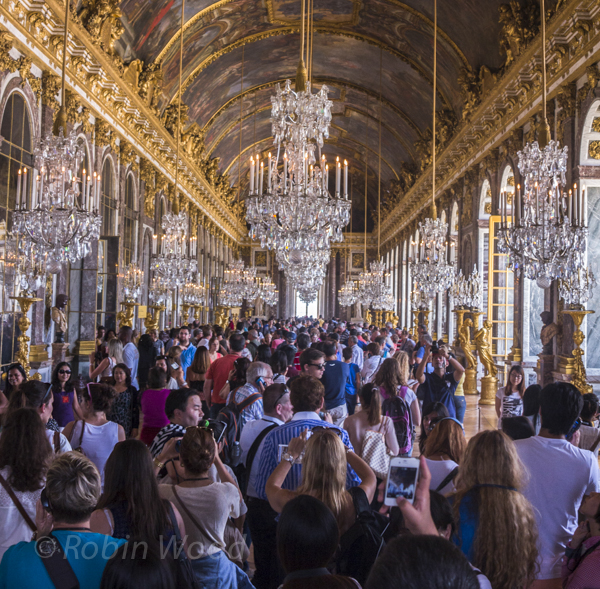
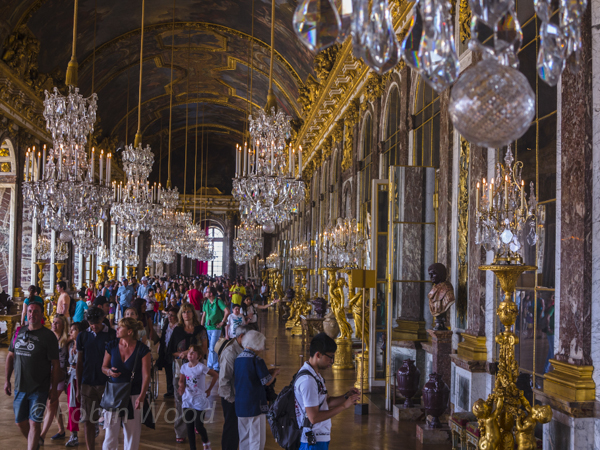
Here’s the hall of mirrors from a not-so-high vantage point I shot July 13, 2013. The similarities and differences between the amount of people but their purpose for their visit are shocking. Chandeliers and much decoration have apparently been since added. 

Lots of people.

Lots of people.

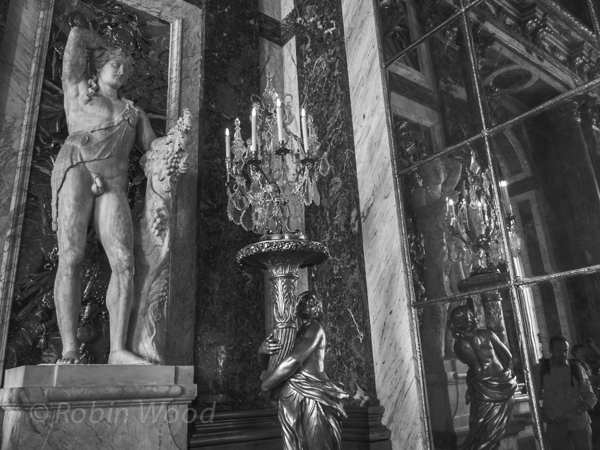
Decoration and mirror closeup.

Decoration and mirror closeup.

And for good measure an image from the other end of the hall of mirrors.

Versailles, France.

Versailles, France.

The Palace at Versailles – Part One.

architecture, Black & White, Photography, Travel

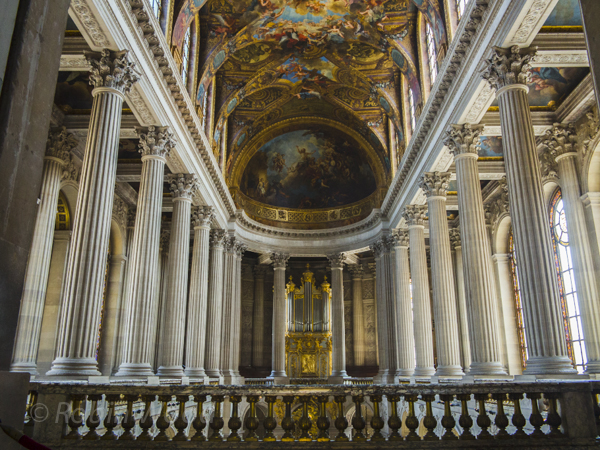
Above: The private cathedral at the Palace of Versailles.

Chateau de Versailles is unlike anything I have ever seen. Enormous, gaudy, deluxe, extravagant, historical, overwhelming and beautiful, all barely begin to describe the centerpiece of the Paris suburb of Versailles. 

Originally built as a hunting lodge for King Louis XIII, the Palace at Versailles was the official seat of power for courts and the government from 1682 until the French Revolution in 1789. Indeed, Chateau de Versailles played a large role in the anger French citizens had directed toward the aristocracy – and the resident King Louis XVI and his wife Marie-Antionette were forced to flee the palace, before both being executed. 

Louis XVI was preceded by his grandfather, Louis XV, who allegedly foresaw the revolutions, as legend says he proclaimed “Après moi, le déluge,” which translates to “After me, the flood.”

This is first in a series of three posts with pictures from the Palace at Versailles. 

Beginning the tour of the Palace, July 12, 2013.

Beginning the tour of the Palace, July 12, 2013.

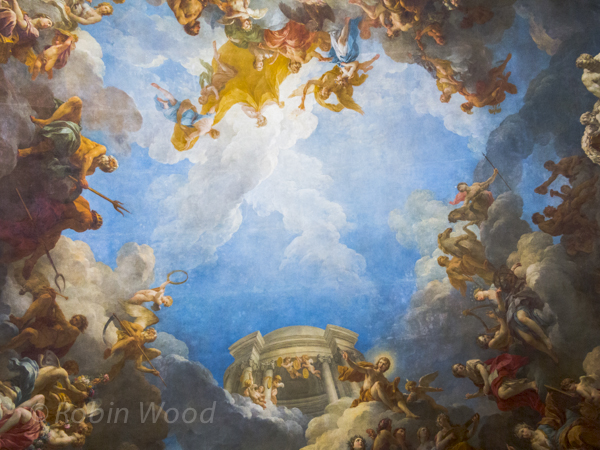
Every square inch is decorated, and ceilings become canvases for colorful paintings. As well as the cause of a sore neck.

Every square inch is decorated, and ceilings become canvases for colorful paintings. As well as the cause of a sore neck.

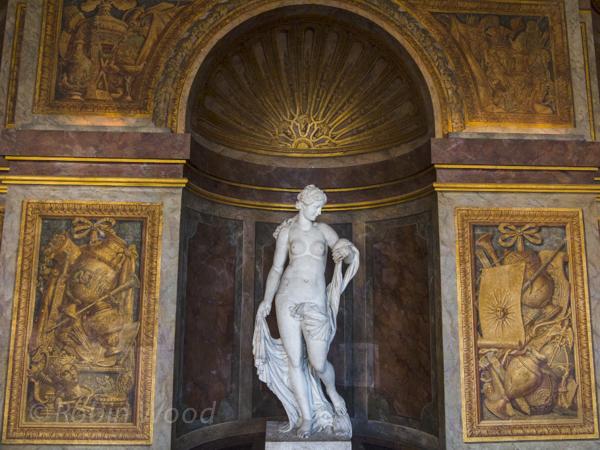
Statues and busts fill any available spot, often portrayed in classical greek style.

Statues and busts fill any available spot, often portrayed in classical greek style.

Statue, Palace of Versailles.

Statue, Palace of Versailles.

Inside Notre Dame Cathedral

architecture, Photography, Travel

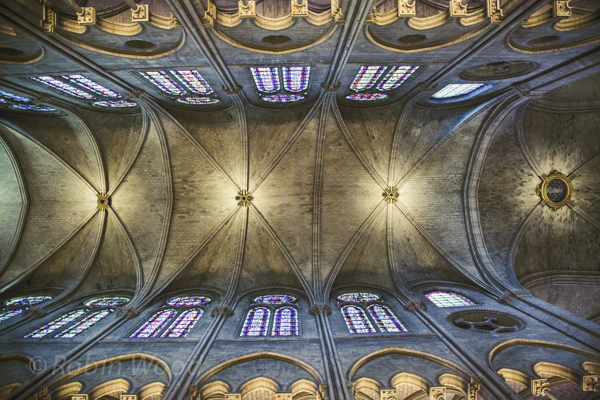
Above: The ceiling of Notre Dame Cathedral

I’ve been blogging about travels in Europe last summer – since my objective is to go mostly chronological  this is one of my last posts from Paris, save film shots or missed images. This is also my last post from Notre Dame Cathedral. Today we travel inside. 

With anything so grandeur it’s impossible to capture to the feeling of being there. Indeed that could be said for any photograph. 

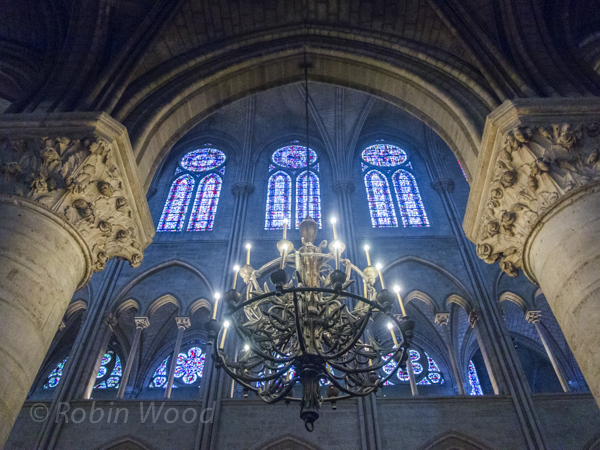
Arches and chandeliers inside Notre Dame Cathedral

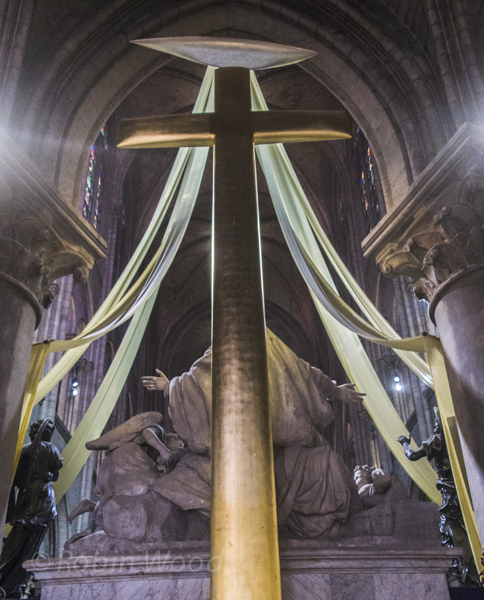
The main altar inside Notre Dame from behind

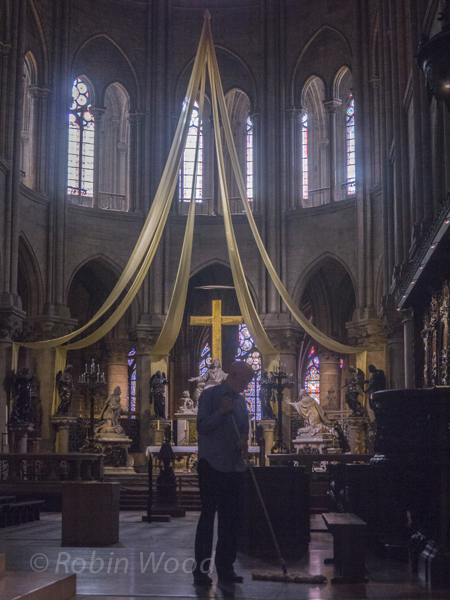
The main altar front, complete with floor cleaning. Notre Dame Cathedral, July 10, 2013.

The main altar front, complete with floor cleaning. 

Notre dame has many altars, the following photo is one of the side altars.

NotreDameSideAltar

Side altar, Notre Dame Cathedral, July 10, 2013.

Photographing inside Notre Dame Cathedral does require a somewhat advanced digital camera. The lack of light means shooting at ISO 1600 minimum.

Arches and a chandelier.

Arches and a chandelier.

Jardin du Luxembourg

architecture, Photography, Street, Travel

The Luxembourg Gardens: The second largest public park in Paris and home to Luxembourg Palace, where the French Senate convene. A popular place in Paris to spend a sunny day. Be careful where you walk, most of the grass is off limits to pedestrians, resulting in quick intervention by a security guard.

Fountains and flowers occupy the central area, backdropped by Luxembourg Palace.

Enjoying sun and scenery at Luxomberg Gardens, July 6, 2013.

Enjoying sun and scenery at Luxomberg Gardens, July 6, 2013.

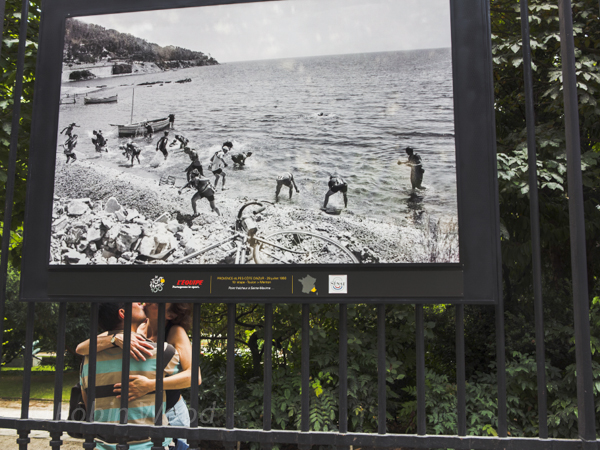
2013 marked the 100th anniversary of the Tour de France, the iconic bicycle race which traverses France. To commemorate the milestone large photos of the race from every generation were mounted on the fence surrounding Jardin du Luxembourg.

While they were all very lovely to look at, creating a visual snapshot over a century of change, I found the most interesting photo involved what hid behind.

Sharing a kiss behind a Tour de France photo dated  July 29, 1950.

Sharing a kiss behind a Tour de France photo dated July 29, 1950.

Notre Dame Cathedral as seen from the left bank Seine River.

architecture, Black & White, Photography, Travel

On the right bank of the Seine River that splits Paris in half stands Notre Dame Cathedral. The first stone of this ancient and enormous house of worship was laid in 1163 by Bishop Maurice de Sully. Built of limestone from nearby quarries, Notre Dame, or “Our Lady,” took almost 200 years to complete and today is the most visited site in Paris.

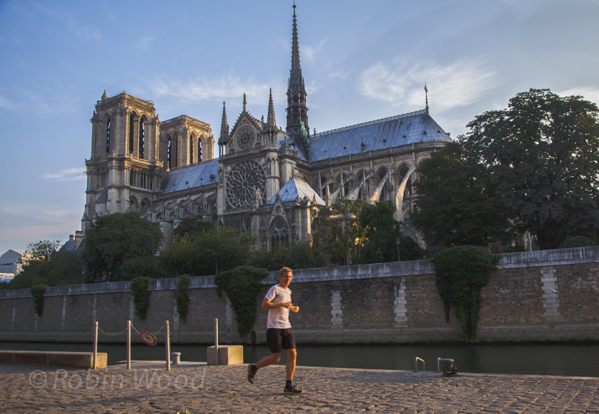
While Notre Dame seems hidden until relatively close due to surrounding structures, once in eyesight it immediately dominates the skyline. In cool morning air and soft light with the flowing water – before crowds arrive in the hundreds – the scene is calm, relaxing.

Something as simple as circling the cathedral is astounding. It radiates history. Everywhere hand-carved statues and motifs overwhelm the eyes. One can’t help but imagine simple peasant farmers in the early days seeing Notre Dame and thinking  they had seen part of heaven.

A jogger makes his way along the Seine River with Notre-Dame Cathedral in the background, July 8, 2013.

A jogger makes his way along the Seine River with Notre-Dame Cathedral in the background, July 8, 2013.

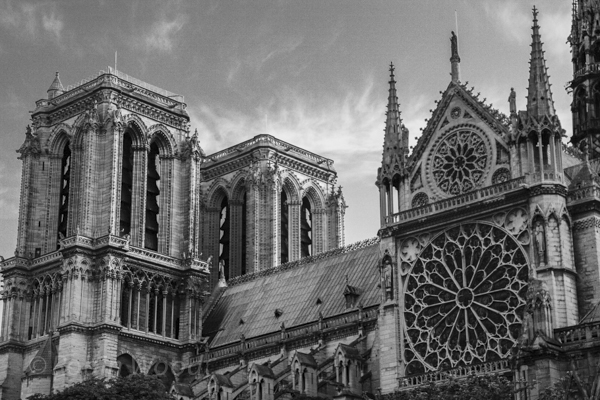
Notre Dame as seen from the left bank of the Seine River.

Notre Dame as seen from the left bank of the Seine River.

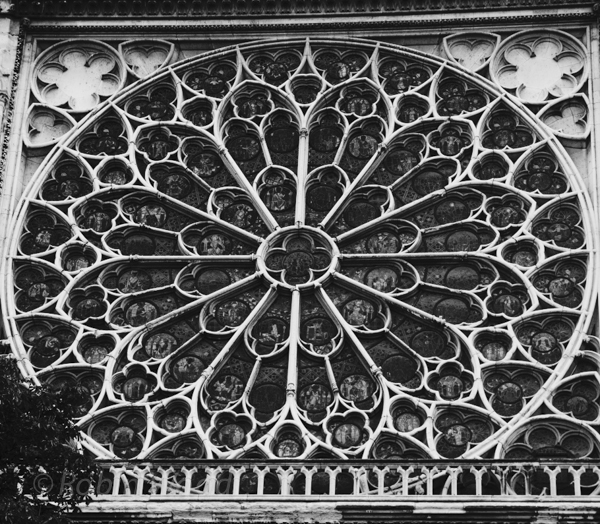
Architecture close up.

Architecture close up.

Weekly Photo Challenge: Focus, on the Notre Dame Cathedral and roses.

architecture, Travel, Uncategorized, Weekly Photo Post

Focus – a powerful concept that applies to so much more then photography. Naturally, when thinking of focus I think equally of the opposite, unfocused. The difference is apparent as black and white. Sharp or fuzzy. Crisp or cloudy. Clear or muddy. Focus is a powerful tool to draw the eye and attract attention. Focus is necessary in all aspects of life – from reading and writing to work and sports.

In photography focus is fairly straightforward. Often my first question when editing a photo: What is in focus? Little is more disheartening then finding a lovely composed and well-timed shot, then realizing the subject matter is out-of-focus. Worse, nothing in focus.

The following two photos are Notre Dame Cathedral in Paris in the background and roses in the foreground. The different focal point and shallow depth-of-field provides a dramatic difference in the images feelings.

With the roses in focus the image feels soft, almost delicate.

Roses and Notre Dame Cathedral. July 8th, 2013.

Roses and Notre Dame Cathedral 1. July 8, 2013.

The following photo, with Notre Dame in focus (perhaps almost in focus,) feels more grandeur.

Roses and Notre Dame 2. July 8, 2013.

Roses and Notre Dame Cathedral 2. July 8, 2013.

These are two images from six weeks I just spent traveling throughout Europe. I will continue to post images of my travels, many with history about the subjects. So please stay tuned!

Very-Temporary Fossils

Alaska, architecture, Photography, Street, Wildlife

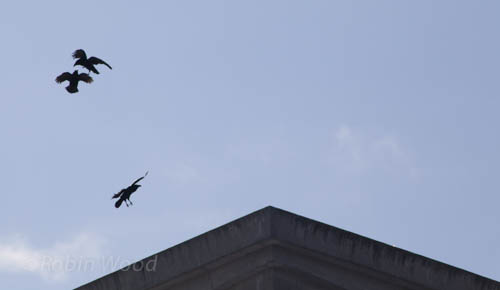
While nothing in Interior Alaska can be considered typical, Fairbanks – typically – isn’t very windy. This winter has brought no shortage of windy days. While occasionally bone-chilling cold, wind also creates exciting conditions. Ravens seem to have fun when currents whip up.

Ravens play in high winds above UAF's Fine Art Complex. April 17, 2013.

Ravens play in high winds above UAF’s Fine Art Complex. April 17, 2013.

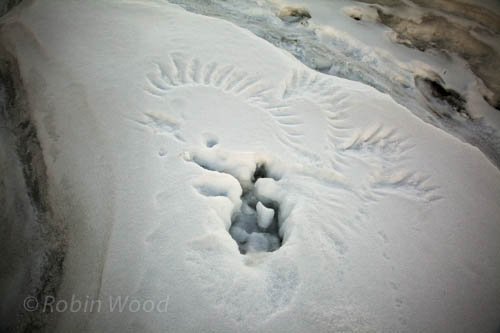
The next day, slowly picking my way down a steep, slippery hill, my preferred route between car and classroom, I found evidence some ravens had been using strong winds and currents to their advantage.

Spiraling strike marks decorated the snow’s surface. A raven had been hunting, likely a small rodent. My friend accurately described it as a “very-temporary fossil.” Indeed unlikely the imprint would be preserved more then a day or two.

A hunting raven leaves evidence in the snow, April 18, 2013.

A hunting raven leaves evidence in the snow, April 18, 2013.

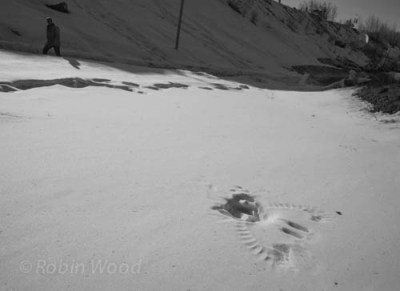
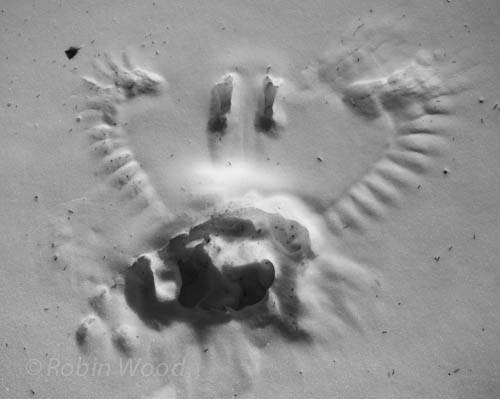
At the time I was en route to grab class materials, happy just to spot the strike, I didn’t linger. Deciding to court a safer path back up the hill, my attention was once more drawn toward patterns in the snow. I couldn’t pass the opportunity to photograph another strike mark. Even if it meant going back to my car to swap tennis shoes for boots.

A pedestrian walks up a path at UAF, near a imprint a raven left in the snow, akin to a temporary fossil.

A pedestrian walks up a path at UAF, near a raven imprint in the snow, akin to a temporary fossil.

Close-up of an imprint left by a hunting raven.

Close-up of an imprint left by a hunting raven.

Weekly Photo Challenge: Geometry. Bridge over Tanana River.

Alaska, architecture, Landscapes, Photography, Weekly Photo Post

I wanted the image I picked for the photo challenge this week to be geometrical at it’s core, not just elements of geometry. Rectangles, triangles, trapezoids and two half-circles dominate the composition. Critically: Even with a slight crop the image holds a lot of dead space and is mostly made dramatic by the fuchsia, late-August sunset.

Here’s a link to a blog titled mustbewonderlust, with pair of striking photos from Australia of the Sydney Harbor Bridge and Opera House.

Happy Monday and a safe week to everyone.

Please click on the image to view full size.

Bridge spanning Tanana River, looking north From Nenana, Alaska. Aug. 21, 2011.

© Robin Wood

Raindrops and Spirits. One of the spirits.

Alaska, architecture, Arts, Black & White, Film, Landscapes, Photography, Portraits, Travel

It’s only four days until my first solo show, I’m excited and busy, but feel it should come together nicely. There are already things I wish I had done differently, but it’s not in my nature to worry, so I’m chalking it up to lack of experience.

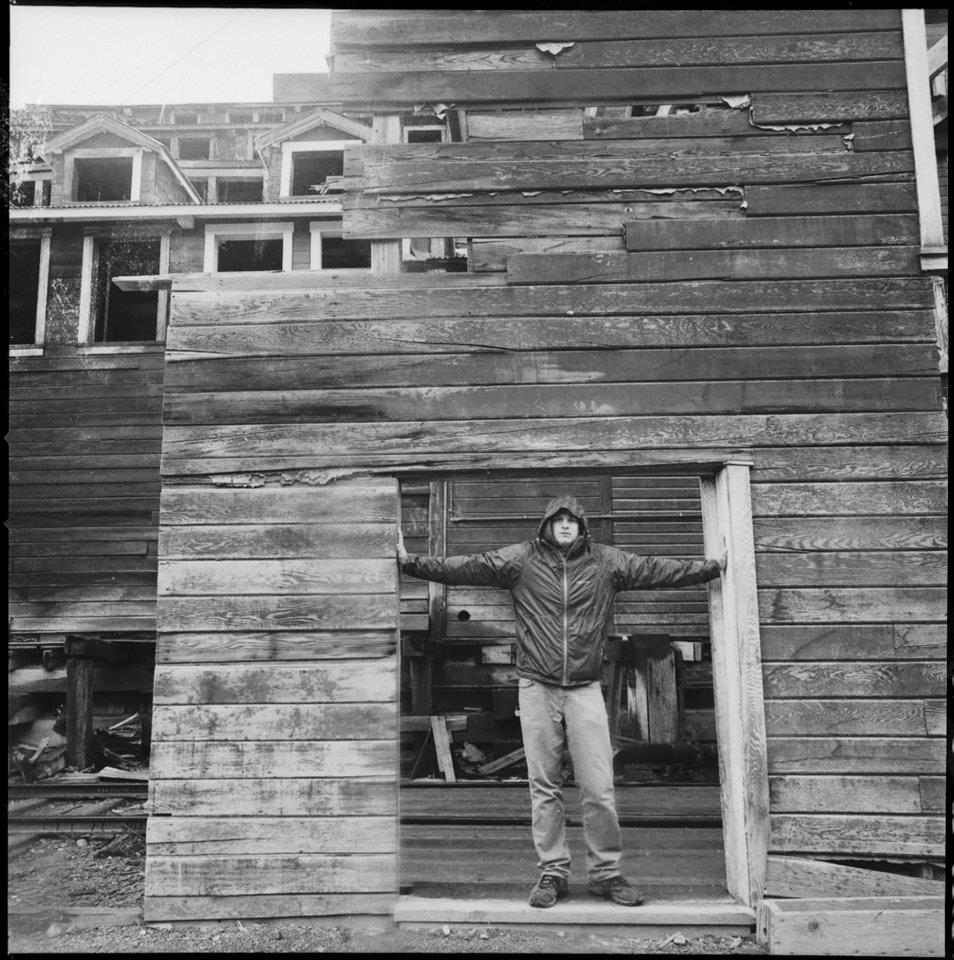
As I said previously, my show is to deal heavily with the role of people within place. Even when people take a a large portion of subject matter they are meant to complement the surroundings. Such is the case with today’s image “David in Kennicott,” A large, strong figure in a commanding environment. Also worth noting is location, most of the images are paired, some in multiple ways. This is at the same location as my title piece “Rain Apparition,” Kennicott in the Wrangell St. Elias National Park. With pairings the viewer is allowed to view locations with many more meanings; the ability to step back, taking in the scene, then moving in closer for detail.

Please click on the image to view full size.

David in Kennicott