Weekly Photo Challenge: Geometry. Bridge over Tanana River.

Alaska, architecture, Landscapes, Photography, Weekly Photo Post

I wanted the image I picked for the photo challenge this week to be geometrical at it’s core, not just elements of geometry. Rectangles, triangles, trapezoids and two half-circles dominate the composition. Critically: Even with a slight crop the image holds a lot of dead space and is mostly made dramatic by the fuchsia, late-August sunset.

Here’s a link to a blog titled mustbewonderlust, with pair of striking photos from Australia of the Sydney Harbor Bridge and Opera House.

Happy Monday and a safe week to everyone.

Please click on the image to view full size.

Bridge spanning Tanana River, looking north From Nenana, Alaska. Aug. 21, 2011.

© Robin Wood

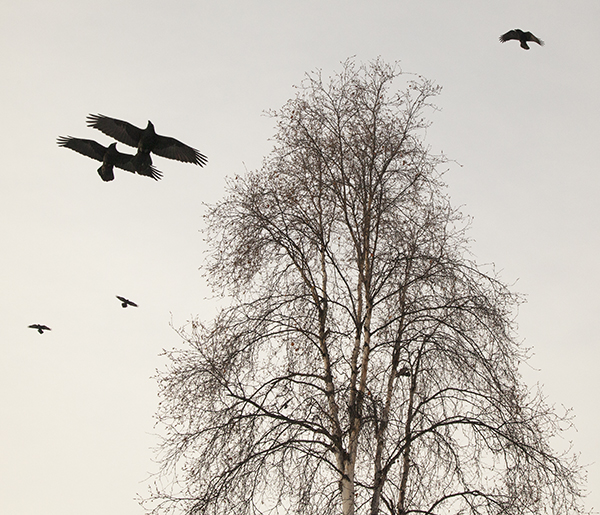
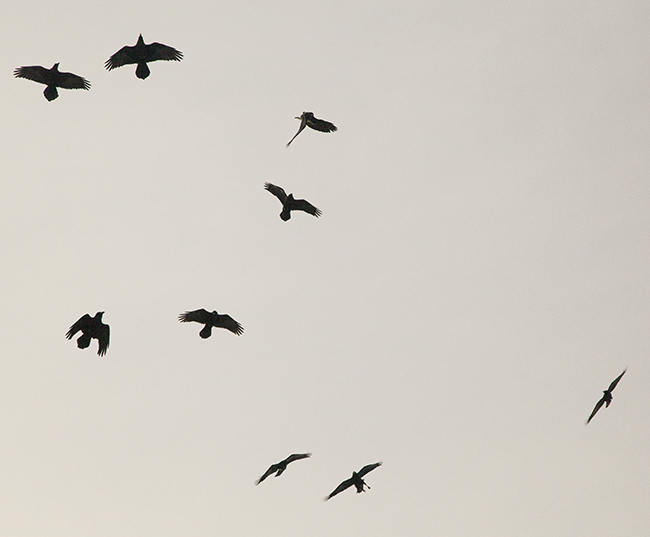
A Halloween murder… of ravens.

Alaska, Black & White, Landscapes, Photography, Wildlife

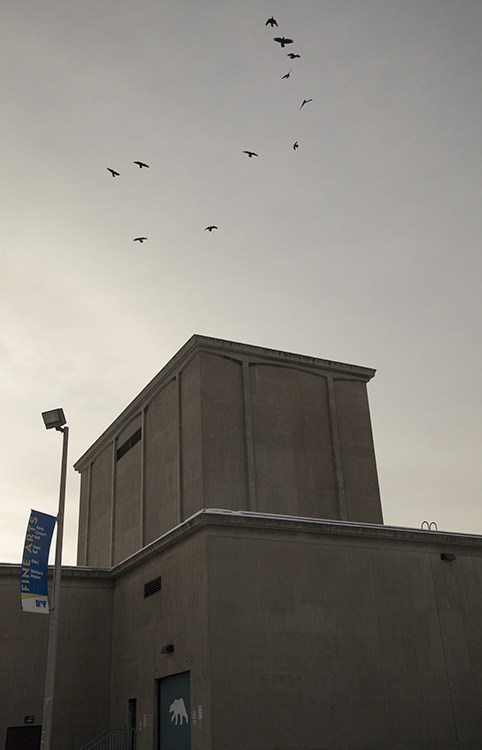
The wind whipped all Halloween. Soaring and swooping ravens took advantage of the strong drafts to have some fun. A flock of ravens is also called a murder, fitting for this last day of October.

Ravens have long held a place in lore. Tricksters and shape shifters are among the most common Alaska fables. Raven Steals The light is a popular North-West Native American story where the earth begins bathed in total darkness. Accounts vary, but the plot often involves the character of Raven pretending to be the grandson of an old man who holds all the light. Raven then steals it and shines it over earth and water.

“And the raven, never flitting, still is sitting, still is sitting
On the pallid bust of Pallas just above my chamber door;
And his eyes have all the seeming of a demon’s that is dreaming,
And the lamp-light o’er him streaming throws his shadow on the floor;
And my soul from out that shadow that lies floating on the floor
Shall be lifted – nevermore!”  – Edgar Allen Poe

Here a murder of ravens flies above UAF. © Robin Wood

Ravens and tree. Oct. 31, 2012.

Uniquely Alaskan towing expedition.

Alaska, Landscapes, Photography

I don’t like to be overly critical of people I don’t know. Don’t judge someone until you’ve walked a mile in their shoes. But multiple encounters with a failed towing operation has led me to conclude these people were largely unprepared, and should have more thoroughly thought out their chosen expedition.

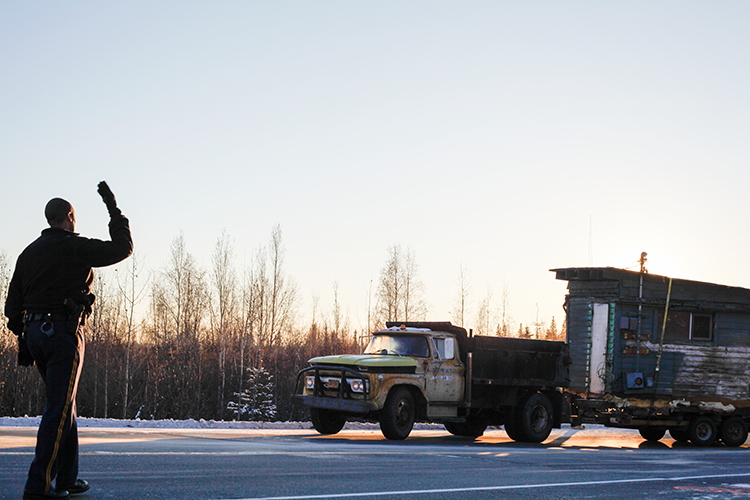
En route to school last week I happened upon an interesting scene. An older-model Chevy dump truck was towing a trailer of some sort down Farmers Loop, a mostly two-lane road connecting east and west Fairbanks. According to the trooper the dump-truck’s engine blew. There are multiple violations I can determine: lack of appropriate flagging, reflectors, license plates or safety triangles. Though they did have bright-orange milk crates.

© Robin Wood

An Alaska State Trooper arrives on the scene of a dead vehicle to direct traffic.

Directing traffic on Farmers Loop Rd. in west Fairbanks.

I left right as a tow truck arrived on the scene, expecting never to see the uniquely Alaskan towing operating again. Wrong. Returning home late that night I found the truck and trailer sitting on the side of the road, having moved only a few-hundred yards.

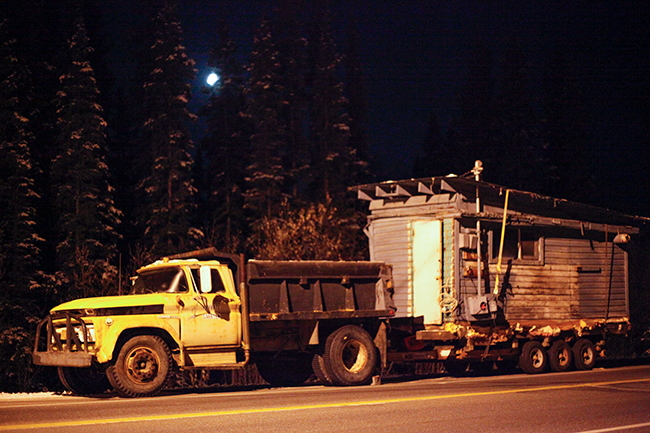
Yellow streetlights and the moon illuminate a broken-down vehicle in Fairbanks, Alaska.

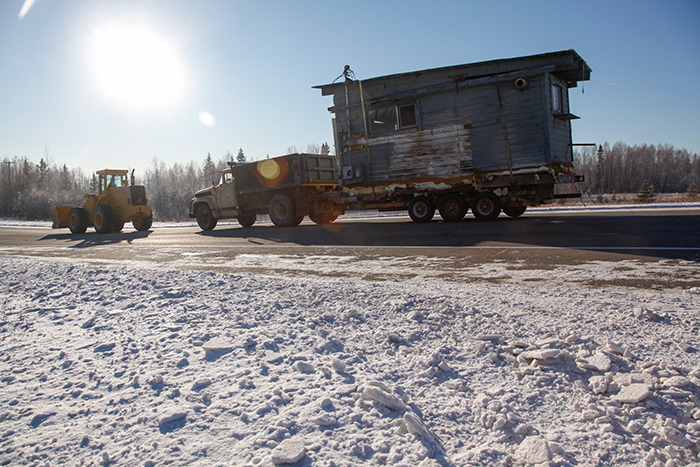
Finally, a full day after first encountering the operation, the truck was gone. Thinking never to see it again I was pleasantly surprised when five miles away I came upon a very slow-moving truck with hazard lights flashing. In front was the dump-truck and trailer combination, being pulled incredibly slowly by a John Deere loader.

Towing broken-down vehicles along Farmers Loop.

It’s anyone’s guess why this was being relocated in the first place. Maybe it’s a habitable trailer and someone needs it to live in. From a photography standpoint, any one of the situations – troopers directing traffic, night time or towing – would have made an interesting picture. But all three together tell a more complete story and provide a lovely sense of time passing.

Weekly Photo Challenge: Silhouette

Abstract, Alaska, Black & White, Landscapes, Photography, Travel, Weekly Photo Post

Probably a little too much detail to be a true silhouette. But the dark outline of the boat emphasized against the cloudy background offers the same effect. I really like the boat far in the background. Image taken in Prince William Sound, outside Valdez, 2011.

Fishing vessels outside Valdez.

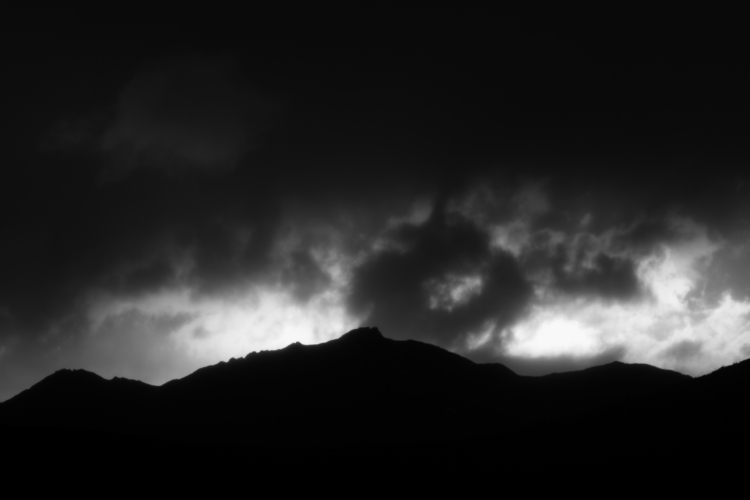
The second image is a true silhouette. Mountains at sunset in Denali National Park.

Mountains at sunset

Critter Corner: Mt. Rainier and Georgeson Botanical Garder Frogs

Alaska, Landscapes, Photography, Travel, Wildlife

A few weeks ago I posted images of real bears in Denali National Park and a bear statue from UAF’s Georgeson Botanical Garden. Today I’m posting a similar diptych: A frog from Reflection Lake in Mt. Rainier National Park and a frog from the botanical gardens.

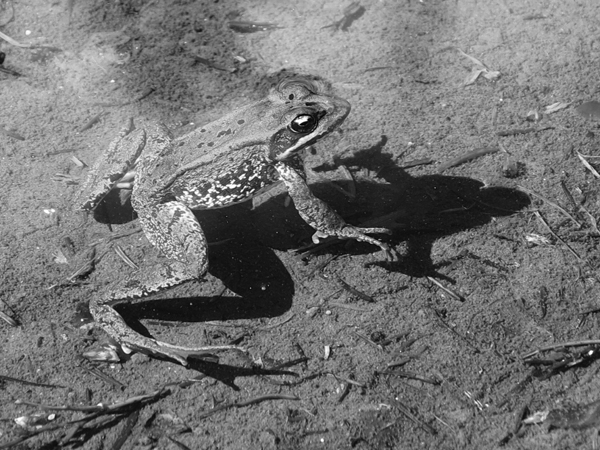
The first image the frog is the only subject, he was an itty-bitty frog, maybe half a deck of cards. The mostly brown hues were rather ugly, so I did a quick and dirty desaturation of the image, converting it to black and white. I think the the black and white does a better job accentuating the frog’s natural camouflage. The shadow provides a small amount of depth to the mostly flat image.

The second image I like a lot because of layers. Shooting through a fence, with more fence in the background. The frog is far from the main subject. What’s fun for me is comparing the two subjects, the real frog in nature and the artificial frog in a man-made environment. I enjoy both, though the statue was a little easier to shoot.

© Robin Wood

A frog floats in Reflection Lake, Mt. Rainier National Park

Georgeson Botanical Garden frog statue.

Weekly photo challenge: Solitary

Alaska, Black & White, Film, Landscapes, Photography, Portraits, Travel, Weekly Photo Post

Solitary: being, living or going alone or without companions. The word instantly conjurs images of some distant wayfarer or contemplative individual. For this installment of the Weekly Photo Challenge, I will show you three of my interpretations of solitary, images I believe convey the mood through subject matter and compositional elements.

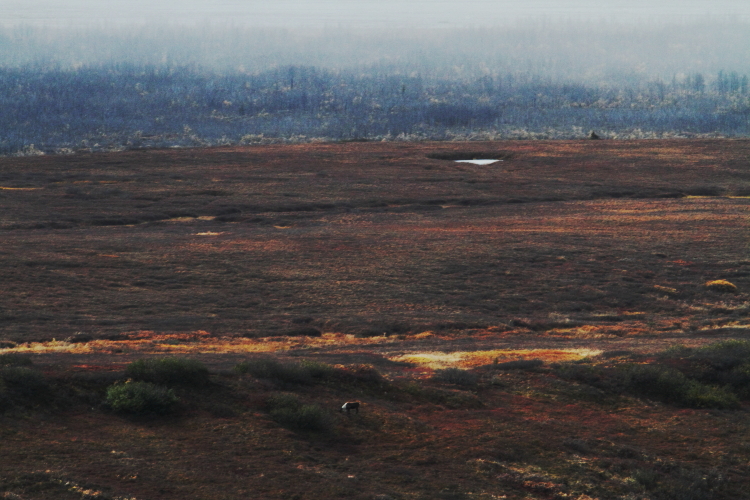
First: a very literal interpretation of solitary. In Denali National Park, a lone-grazing caribou is seen in vast tundra. I wont even begin to speculate on the distances, however it was shot with a 300MM telephoto lens on a Canon 7D. The importance of the 7D is the smaller APS-C sized sensor increases the 300MM lens to an effective focal length of 480MM! As focal length increases, the depth of a picture is flattened, making the relationships of everything seem closer.

In short, this caribou is very alone.

Please click on the images to view full size.

Lone caribou in Denali National Park, Sept. 16, 2012

My second image is more metaphorically solitary. The model and her shadow are all the viewer has to dwell on. I think her gaze off the edge of the frame, often deemed poor composition because the viewer wonders what the subject is looking at, gives the feeling that there is nothing besides more wall, adding to the solitary feeling. Also helping is the edge of the 4×5 film, terminating any curiosity about what else there may be.
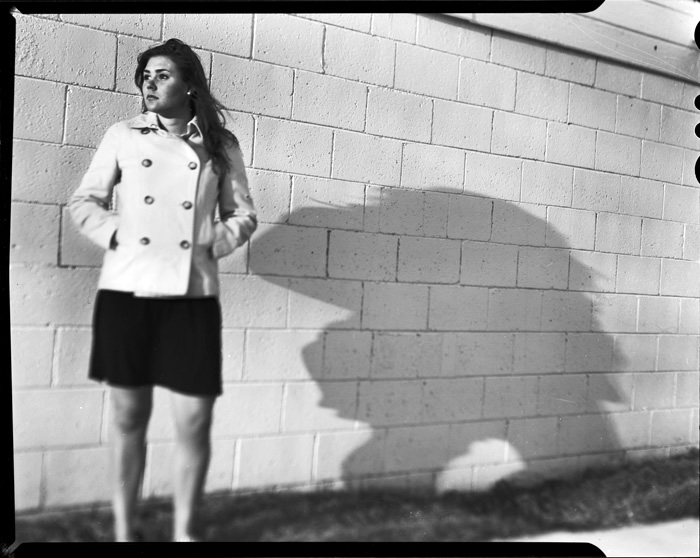
Crystal at Creamers Field

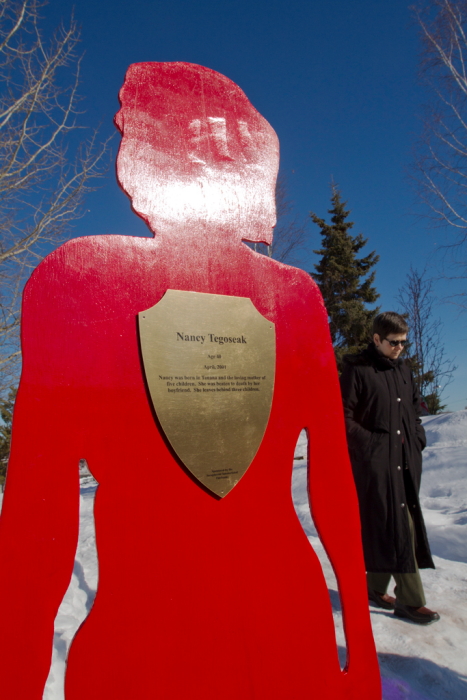
Finally a somber event that would leave anyone feeling solitary. A woman walks past a cutout to honor a victim of domestic violence. The plaque reads,

“Nancy Tegoseak, Age 40, April, 2004. Nancy was born in Tanana and the loving mother of five children. She was beaten to death by her boyfriend. She leaves behind three children.”
Mt. Rainier: I fell asleep beneath the flowers

Landscapes, Macro, Photography, Travel

Wildflowers are a main attraction to be found on Mt. Rainier. There are obviously many others: great views, unique structures, waterfalls, glaciers and abundant wildlife. I will feature them all in the weeks to come. But it’s Friday, so let us relax, enjoy the beautiful fall and maybe daydream a little. To facilitate those feelings take a look at the pretty purple flowers.

Please click on the image to view full size.

Weekly photo challenge: Near and far

Landscapes, Photography, Travel, Weekly Photo Post

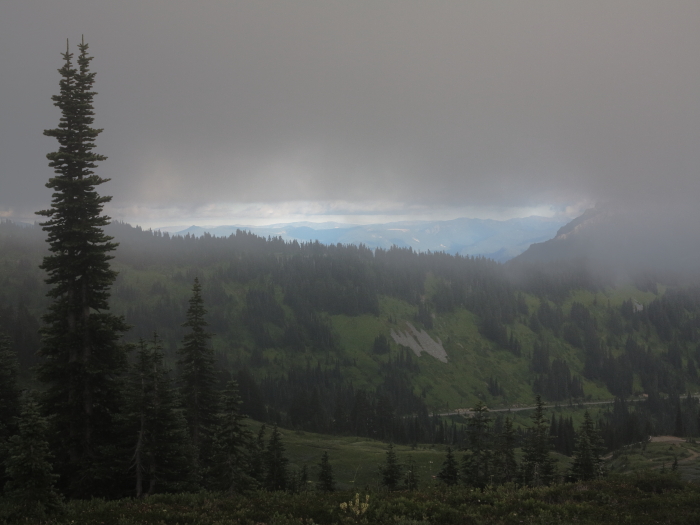
The weekly photo challenge is a different photo assignment from dailypost. This week is near and far, two-dimensional images with a three-dimensional feel. Low point-of-view and converging diagonal lines are two ways to accomplish this, another approach is get some high elevation. To increase the effect foreground objects or size perspective give depth.

My image comes from a very overcast day on Mt. Rainier in Washington. Not only does the ominous hanging cloud provide more of a foreground it creates an extra horizon line and a tunnel for the eye, directing it towards the hundreds of miles of rolling foothills.

Please click on the image to view full size.

Swans and bikers on the Richardson Highway

Alaska, Landscapes, Photography, Travel, Wildlife

The Richardson Highway is 368 miles of pavement connecting Fairbanks, Alaska with Valdez to the south. The highway is typical of those found in Alaska: crossing mountain ranges and a very steep pass, with the occasional view of a glacier. Also common among many Alaskan roads, wildlife viewing. A trip down to Valdez earlier this summer brought multiple sightings and photo opportunities of swans.

Please click on the image to view full size.

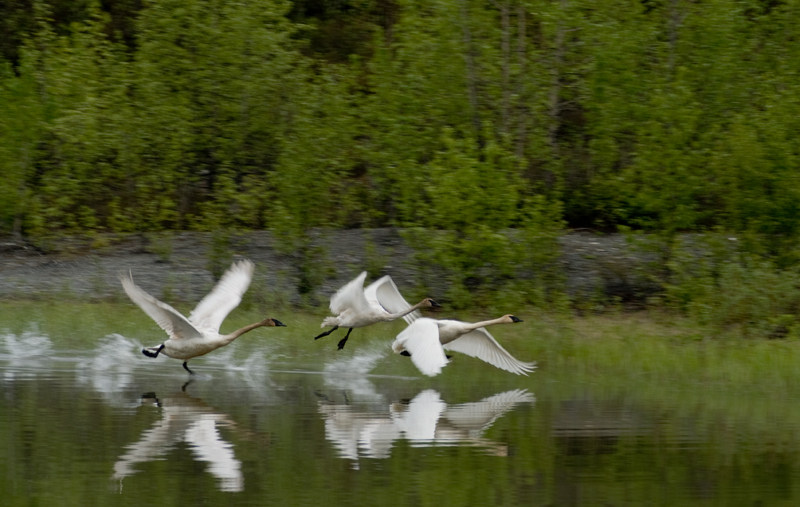
The first group of the birds were farther off the road and didn’t allow me to get very close before taking flight, but offered me a nice action shot in the process.

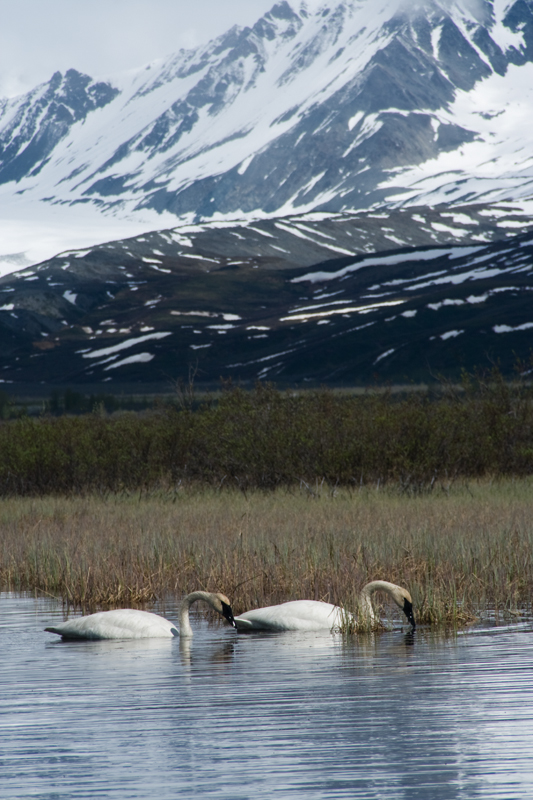
The second group, much closer to the road, was far to concerned with eating to be spooked by my presence.

Then, after a few minutes of photographing, I got that unique shot photographers hope for. There in remote Isbabel Pass, more then 100 miles south of Fairbanks and with Gulkana Glacier in the background, a long-distance biker seemed to come out of nowhere, stopping to take a picture himself. Unfortunately without the preceding picture one easily looses the beauty of these large, graceful and powerful birds.

Digital, hiking Granite Tors and a candle

Alaska, Landscapes, Photography, Portraits, Sports, Travel

Sometimes I put my foot in my mouth. Photographic tastes are fickle, and after saying film is a major part of my aesthetic I decide to go more digital. There are many reasons, but I’m not trying to get too personal in this blog. One of the primary reasons: film’s magic for me is black and white. The film is cheaper and I can process it myself. But sometimes I just want to see the world in color. Another reason: to make steady money with photography while possible shooting film, one need’s a very well established name. The final reason is, in all fairness, probably the most important, ISO. Also known as ASA or simply film speed, it is a rating of sensitivity to light. Digital cameras can shoot at such high ISOs (6,400 and above) film cant hold a grain to it.

So I splurged, bought my first unused camera, but thanks to a combination of reward points the bill was cut more then fifty percent. Here are two pictures from my first few rounds of shooting.

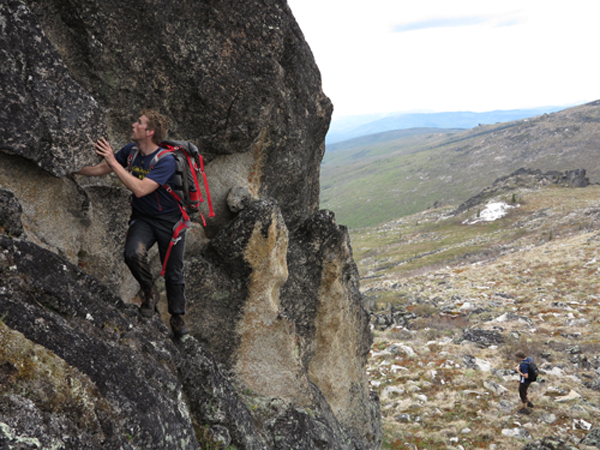
Patrick left and David right, Granite Tors east of Fairbanks.

The picture above was taken at Granite Tors, a popular climbing destination and fifteen mile hike outside of Fairbanks. What I like about this picture is scale. The far horizon is balanced by the climber in the foreground. Then after viewing the second hiker a sense of elevation is really present.

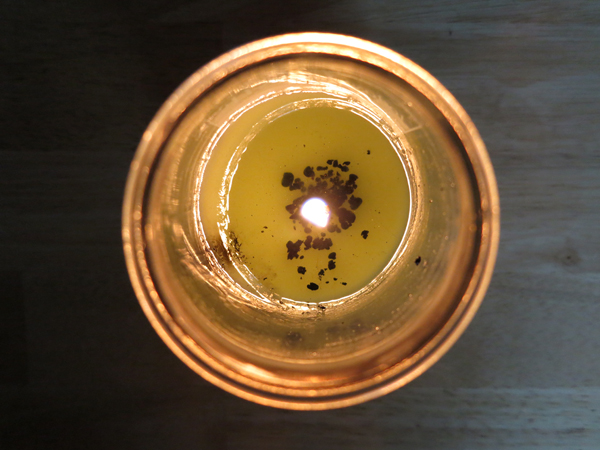
A candle burns during a rain storm.

Humans see in color, and despite my love for black and white color makes, or breaks, many photos. In this image the strong monochrome and repetitive circles ground the viewer, while the abstract composition makes them wonder if they’re looking at a celestial formation.

.