Above: The old barn reflected in a puddle at Creamers Field
Late season rain made for a good photo opportunity in puddles and on ice. Not to much to say today, just pretty pictures.
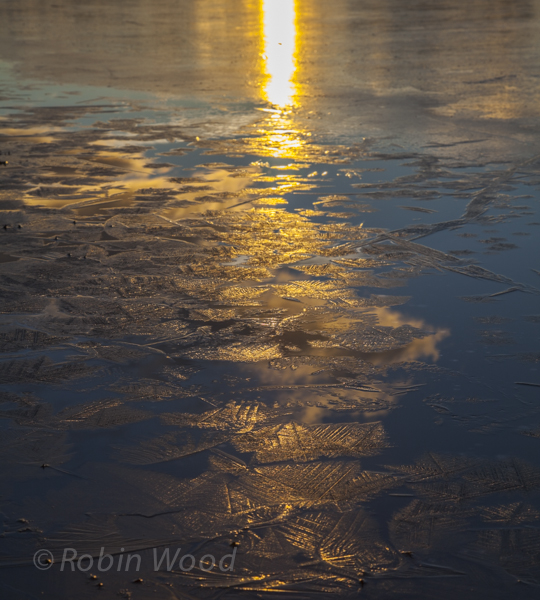
Sunset glows on ice crystals Oct. 29, 2013
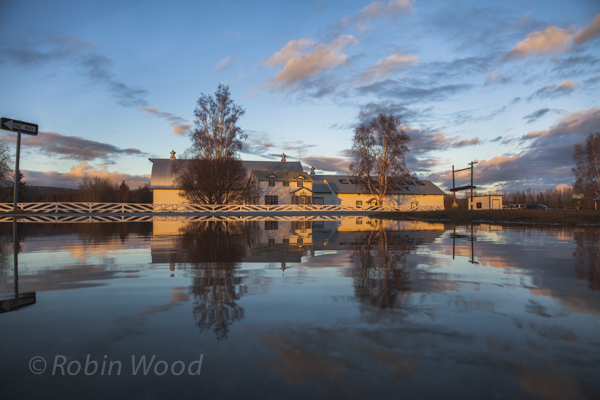
Above: The old barn reflected in a puddle at Creamers Field
Late season rain made for a good photo opportunity in puddles and on ice. Not to much to say today, just pretty pictures.
Sunset glows on ice crystals Oct. 29, 2013
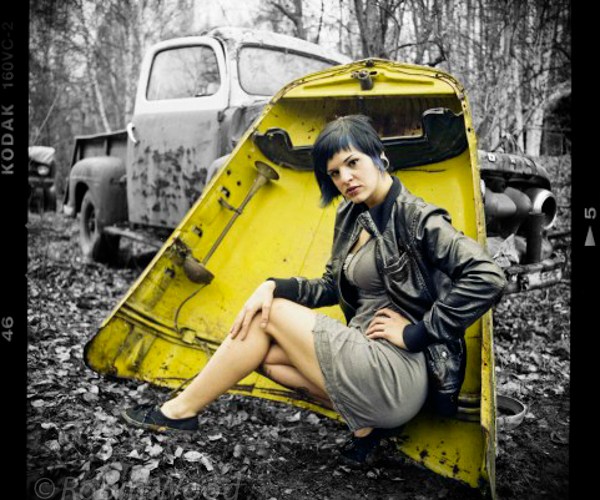
Above: Heidi in the Hood, a selectively-saturated portrait.
It sounds and feels like a lot – this is my 100th post. Thanks to everyone who visits! I have spent a lot of time running Far North Light and loved every minute. It’s great to have so many people show an interest in seeing things through my lens for a little while.
To commemorate 100 posts I have made major formatting changes. Most notable is the blogs appearance, it now includes a homepage with a slideshow, and will in the future include more galleries and portfolios. Please check out my updated about page as well.
I decided there would be no better way to mark 100 posts then to revisit some of the most popular. Note: as this is the second incarnation of Far North Light some of the images were not previously on the blog, but needed to be revisited regardless.
Do you have a favorite photo that I didn’t include in the best-of? Let me know and I’ll make a follow-up post.
Strange Day was the first 4×5 large-format negative I ever took, and one of my first images ever accepted into a juried art show. The following image is a scanned silver-gelatin fibre print. If I knew how I achieved such black clouds, I would tell you.
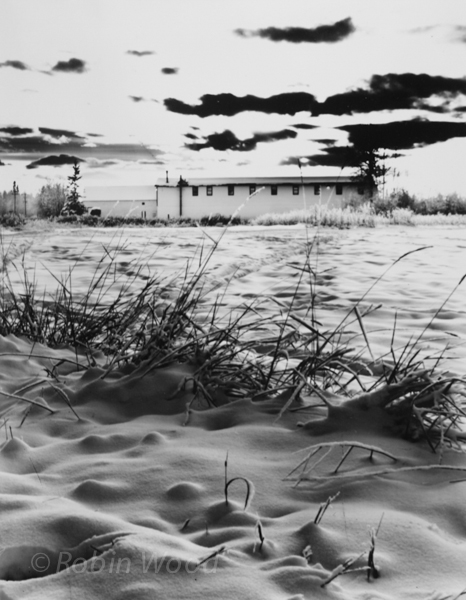
Strange Day
Stange Day was taken at Creamers Field, which was a diary farm and is now a migratory wildfowl refuge, and one of my favorite places to photograph. It’s excellent for everything from landscapes to portraits. The next is a wind drift closeup from Creamers, also 4×5.
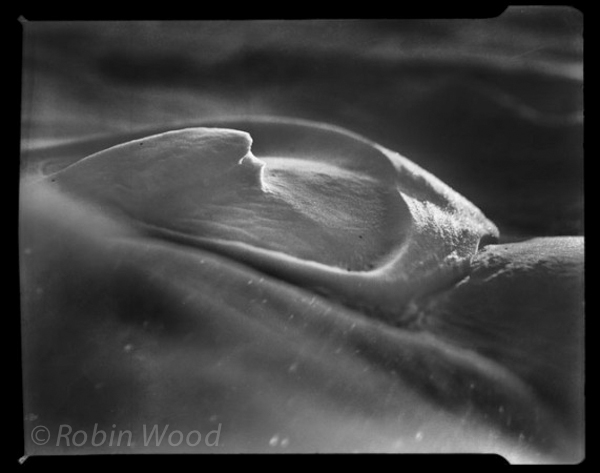
Wind Drift
I don’t often go in search of wildlife, but when given the opportunity do photograph it.
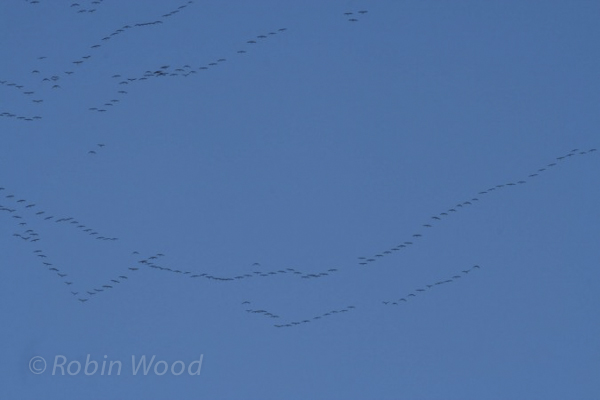
Migrating Canada geese.
One of my favorite posts is from Halloween 2012.
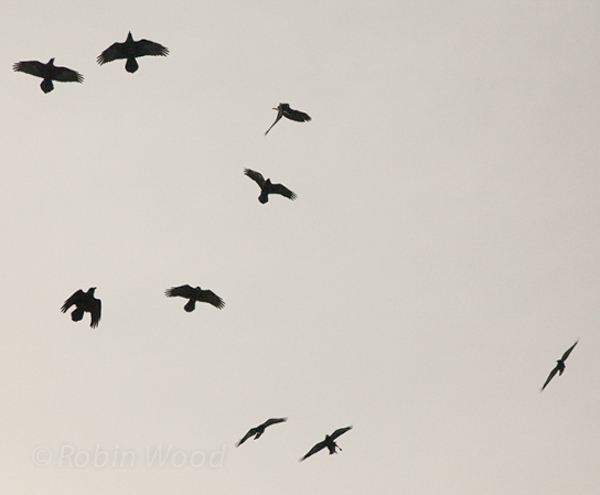
Ravens play on a windy Halloween day.
No compilation post about photography would be complete without some of my photojournalism. From Oct. 17, 2012
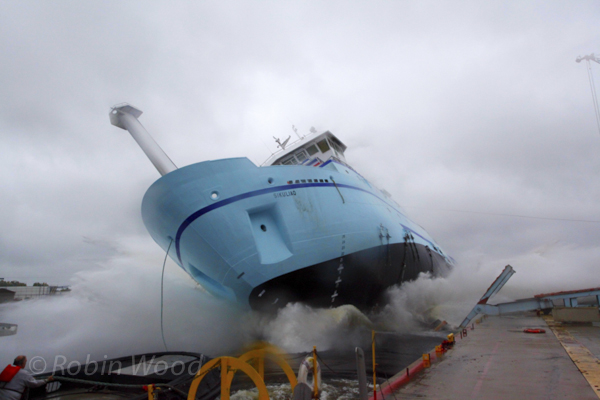
Research Vessel Sikuliaq gets its first taste of the water, Marinette, Wis.
And from my coverage of presidential candidate Ron Paul’s visit to Fairbanks.
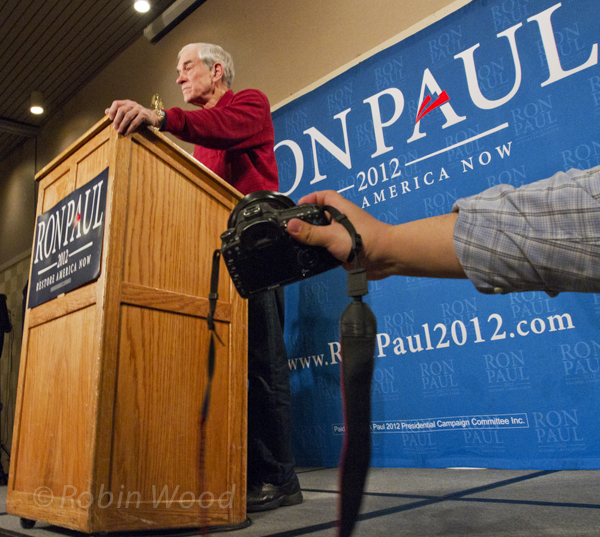
Ron Paul speaks in Fairbanks, March 4, 2011.
As I’m sure is obvious this is but a small collection of the posts and stories I’ve shared. Many of my personal favorites I put into the homepage slide show. I hope you enjoyed, and stay tuned for many more images!

Above: The odd green color makes romanesco feel even more bizarre.
Continuing the harvest theme from my last post about blueberries, it is fall after all, today includes some vegetables grown in my garden. Few things are more satisfying then a delicious home-cooked meal made with food you grew. Much like the blueberries, it can be difficult to find time to photograph vegetables rather then planting, picking or eating them. So here’s a few photos of some photogenic plants.
Potatoes are my family’s main crop, and come in many varieties. My favorite is probably Irish Reds. They work for many recipes, and look fantastic.
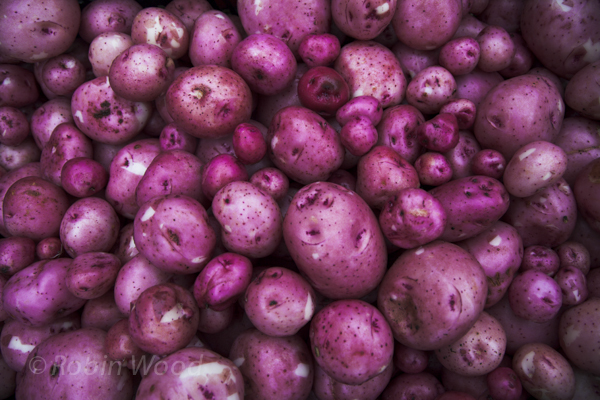
Fresh washed Irish Reds.
One vegetable perhaps more known for its appearance then its use as a food is romanesco, from the cauliflower family. Occasionally called “martian vegetable” for the lime green color and spiraling fractals that form the structure, it can be a very perplexing plant.
I chose black and white to emphasize the plants form.

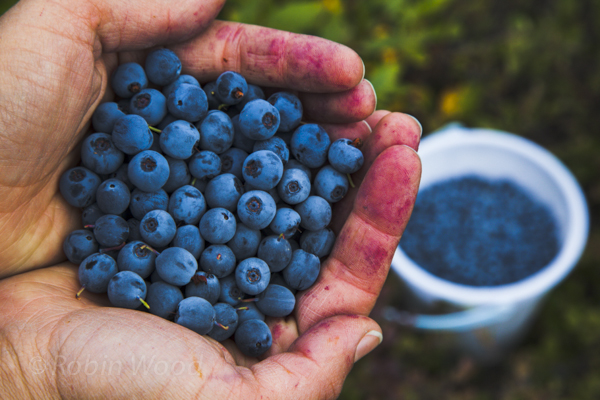
Above: Handfull and bucket full of berries.
Fall in Alaska brings much more then decreasing temperatures and less daylight. Gorgeous colors fill the hills while harvests fill the pantries. The near total daylight of summer allows great success over the short growing season. The harsher, cooler climate vegetation endure make for sweet and succulent food.
Blueberries are both incredibly tasty and incredibly healthy. Packed with antioxidants, blueberries are often called a brain food for their anti-aging and protection-properties for brain neurons. A 2012 article from Alaska Dispatch describes how antioxidants “pick up loose oxygen-seeking substances that, left to roam, will ultimately find a healthy cell to deplete.” WIld Alaskan berries have repeatedly tested to be much higher then farmed berries in health benefits.
The vibrant colors also fit in nicely with the Weekly Photo Challenge: Saturated.

Berries topped with dew rest on a branch.
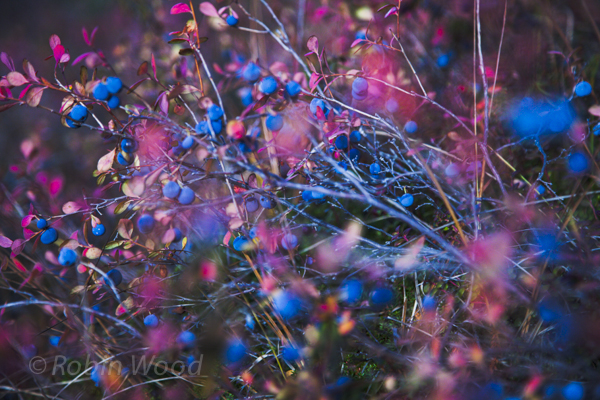
A sea of color.
Once again from UAF Summer Sessions, Concert in the Garden performance by Susan Grace, Alaskan troubadour, singer and songwriter. Her songs analyzing the effect humans have on the planet were made more poignant by the smoke blowing in from a nearby wildfire. It wasn’t enough to deter people from enjoying the music. The concert took place June 17, 2013 at the Georgeson Botanical Gardens.
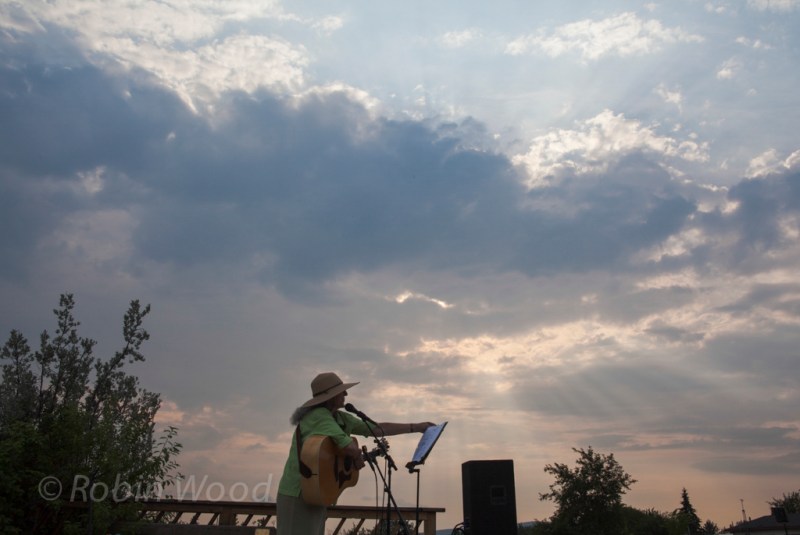
Sun rays streak through smoke.
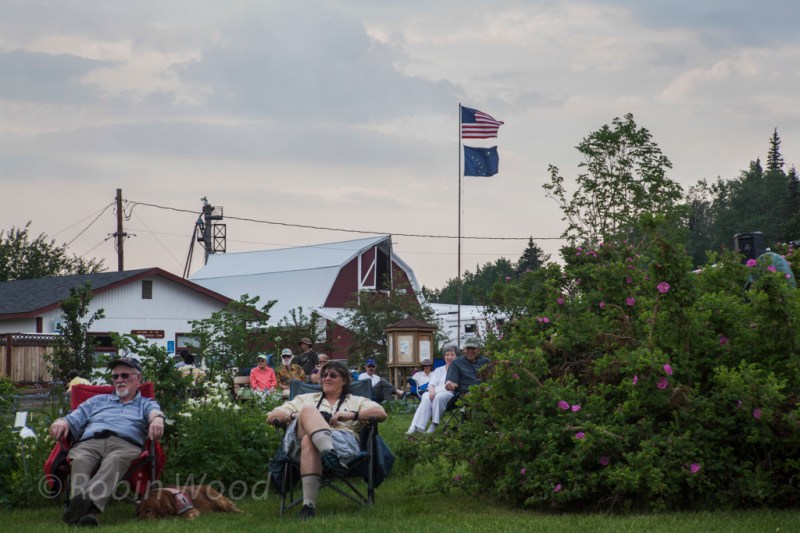
Flags fly at UAF’s Georgeson Botanical Garden.
Concert in the Garden was a fantastic event to photograph. So much is happening in a very compact area, allowing for photographs with many different elements.

Checking out the train.

Work for some, play for others.
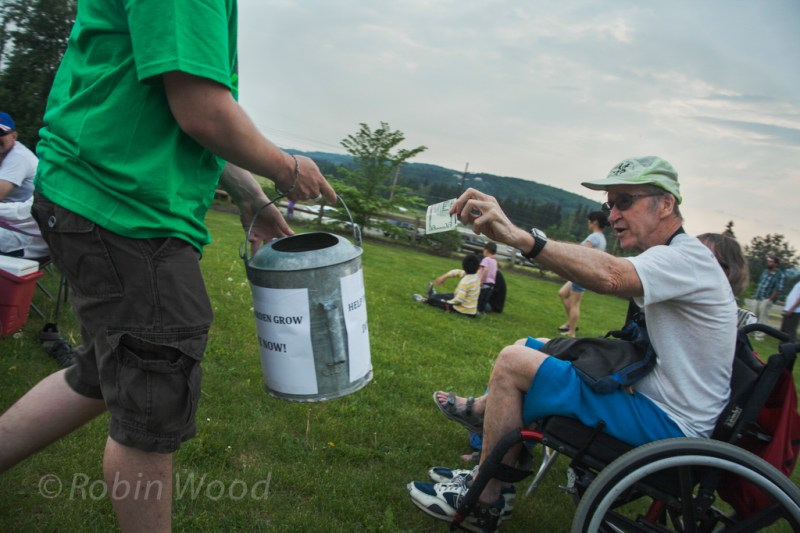
People gladly support the gardens during the free concerts.
Can’t have a post about music without the standard close up of the musician!

Susan Grace taps her guitar and sings, June 27, 2013.
Farmers Loop, just north of Fairbanks, still lives up to it’s name. Multiple residences have horses right along the road. There’s still a hayfield and the occasional garden visible. This photo shows a horse, at what must be a common spot for him to stand, watching people and traffic pass by. Shot at 9:26 p.m., June 16, the low sun illuminates his mane nicely.

A horse looks longin
I recently took a short, part-time job for UAF Summer Sessions photographing classes and events. Included in those events was concert in the garden, a weekly, outdoor concert held in UAF’s Georgeson Botanical Gardens. The lovely settings, typically great weather and lively music drew large, energetic crowds. On June 20, 2013, Will Putnam and Trudy Heffernen delighted the audience with their country-bluegrass rock.
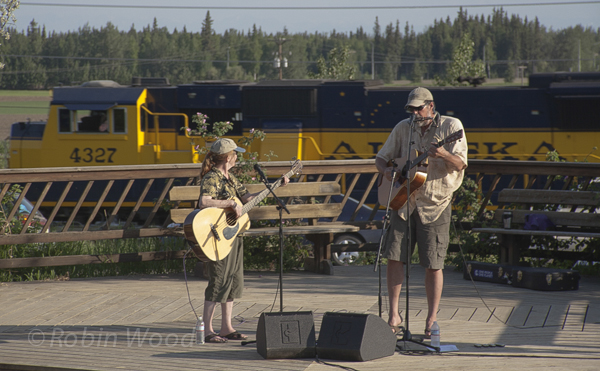
Alaska Railroad trains may make music harder to hear, but add fun picture elements.
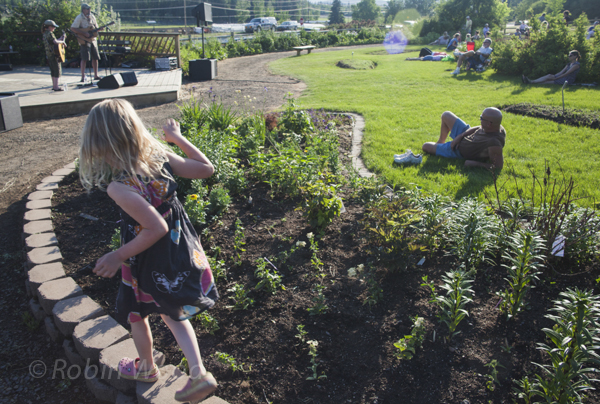
Playing and laying.
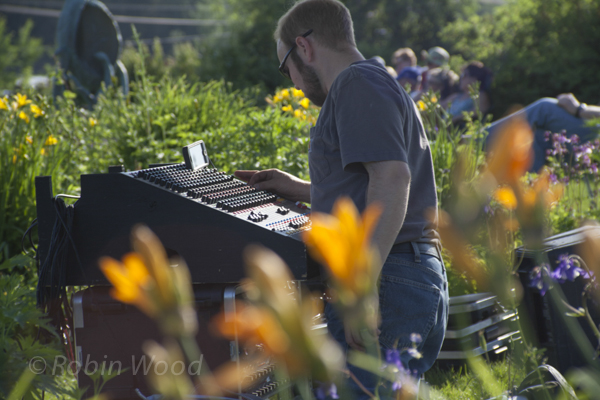
Always working: Josh Bennett, of Sound Reinforcement Systems, mixes the music.
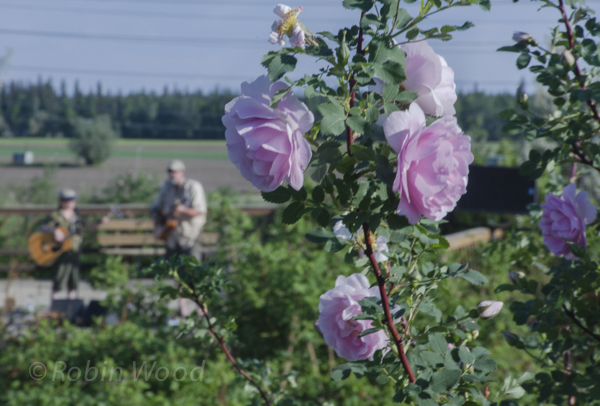
Roses in the foreground, musicians in the background.

More excited exploration.
My passion for photography began when I took a darkroom class in high school. To this day I continue to shoot film and make fiber prints, admittedly, not as much I would like.
I have long been working on a portfolio titled Creamers Field on Film. Creamers Field is an old dairy farm turned migratory waterfowl refuge. The criteria for the portfolio is simple: shot on film, at Creamers Field. Right on the northern edge of Fairbanks, with beautiful historic buildings and an incredible range of landscapes, I highly recommend a trip there for anyone visiting Fairbanks.
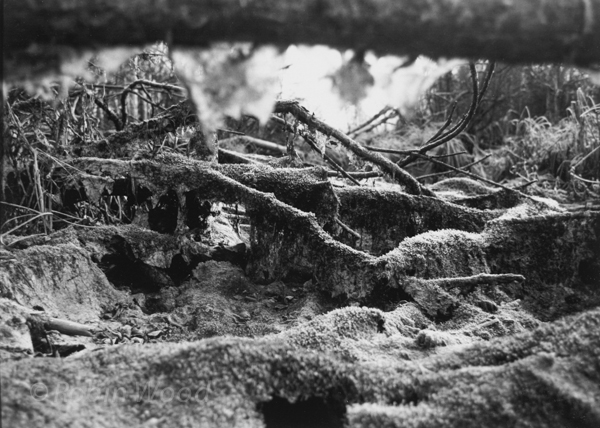
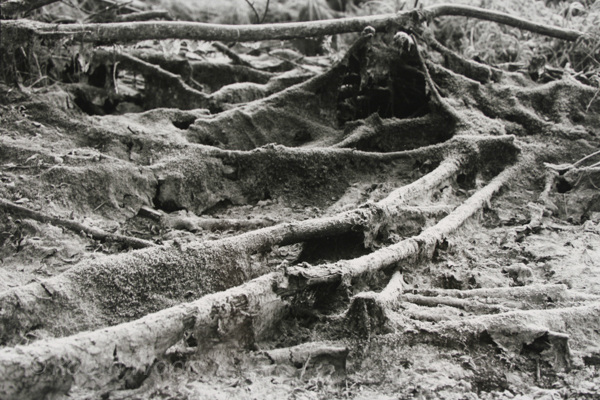
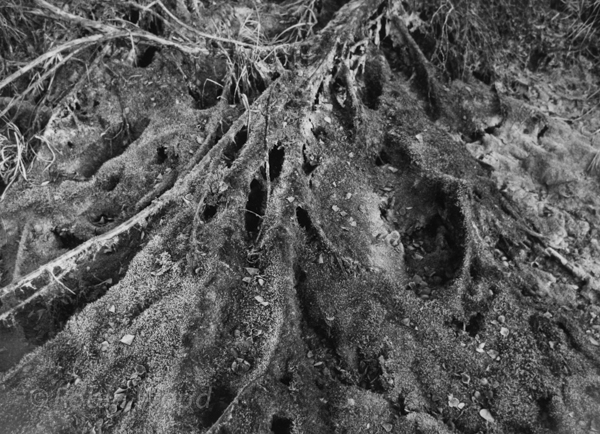
The three images today were shot on B&W 35mm Illford Delta 100, the digital files are scans from 8×10 fiber prints.
Shot just one day before the first snowfall, the moss was all but dead, resembling skin draped over bones.
It’s a subject I’ve talked about before, long Alaskan summer light. Dusk and dawn, referred to as “golden light” in photography, are but a few short hours apart. A fishing trip to the Copper River Valley early June gave me a prime opportunity to photograph both ends.
In the first image: Alpenglow illuminates Mount Drum, left, and Mount Sanford, right. Shot at 11:10 p.m., June 11, 2013.
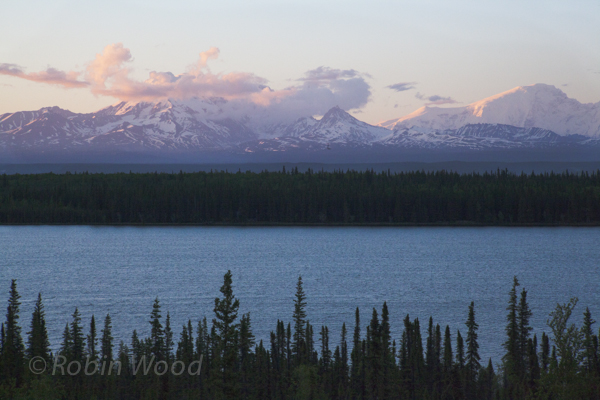
Alpenglow highlights mountains along the Richardson Highway,11:10 p.m., June 11, 2013.
Before getting on the boat the next morning I walked down to the Copper River to photograph a gorgeous sunrise, At 4:30 in the morning, just over five hours later.

Sunrise over the Copper River at 4:30 a.m., June 11, 2013.
Fairbanks is fortunate to receive the late-night light that blankets high-latitude lands. There rarely seems to be a shortage of it, and it makes many activities available all times of day. May 15 the sun had set just before midnight, while I was out riding my bike. The afterglow provided some fun photo effects.
My favorite was illuminated railroad tracks and a descending plane above. Shot at 11:57 p.m.
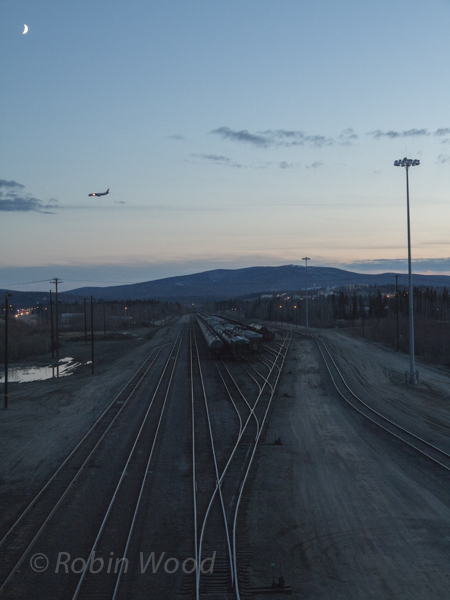
A Boeing 737 approaches Fairbanks International Airport. May 15, 11:57 p.m.
A few things attracted me to the next shot, the soft sliver of a moon contrasted the flattened and fragmented patterns of the car carrier and building.
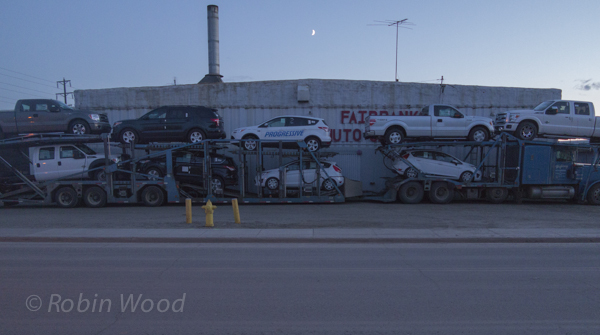
Car transport parked with crescent moon above. May 16, 12:02 a.m.
 Far North Light